First Timer: Walking the Walk at Learning2 Asia 2025
What happens when educators design learning the way we want learners to feel?
Kimber Coté is currently serving as an Instructional Coach: Technology & Innovation at UNIS Hanoi - the host school for L2Asia 2025. In this role, Kimber actively collaborates with peers to support technology integration and the implementation of Universal Design for Learning (UDL). With past experience overseeing the integration of instructional and assistive technologies in a school for students with learning differences, Kimber brings a wealth of practical knowledge to this topic. Her background also includes leveraging blended and online learning in curriculum development, and she has worked with grade K-12 as a classroom teacher.
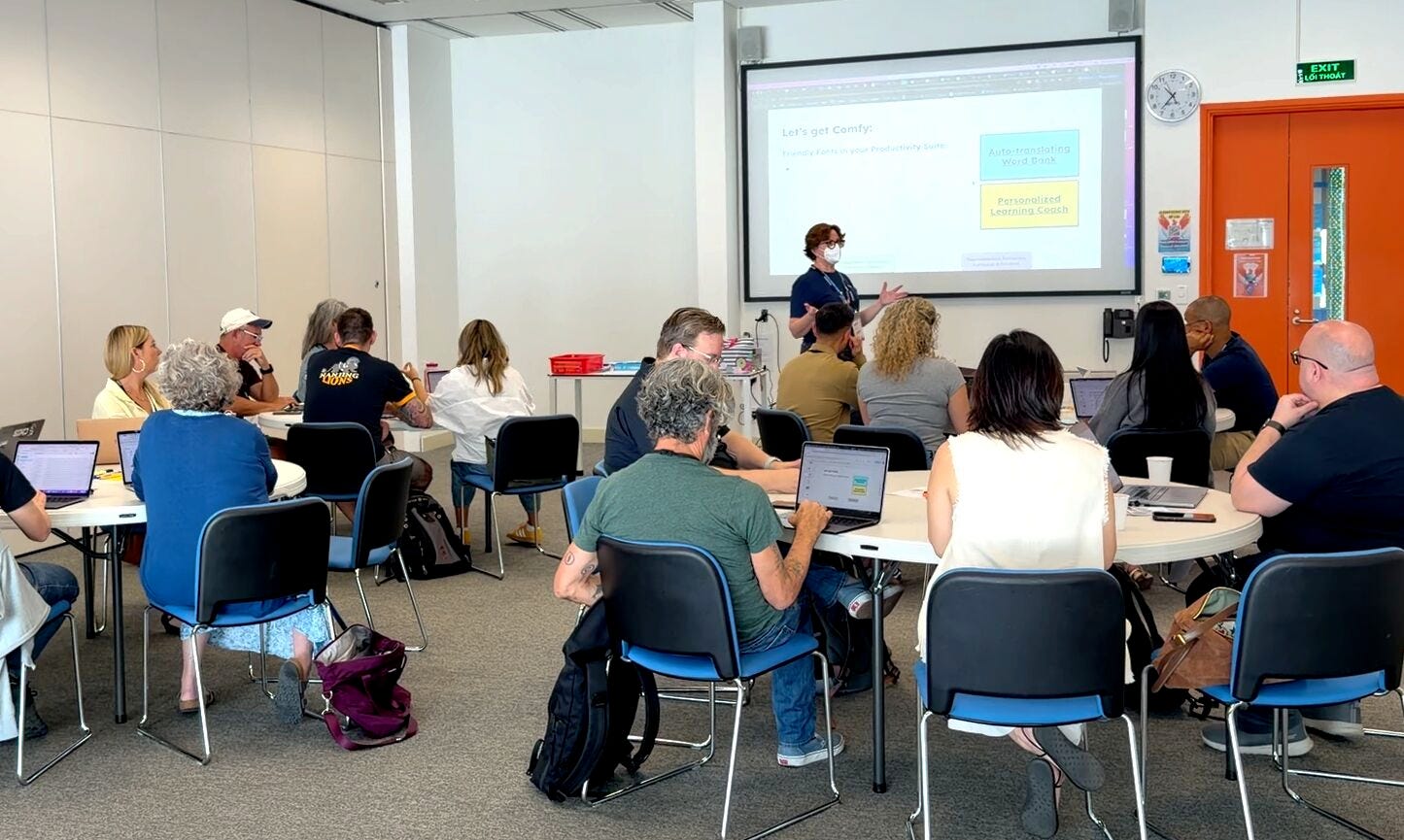
I had heard from colleagues and friends that L2 is a special kind of conference, but I felt it firsthand in my double debut: not only was this my very first time attending an L2 conference, but I was also diving straight into the deep end as a workshop leader. As I look back at the conference and my session, “Supporting UDL with Technology: Tools and Practices for Inclusive Learning,” the overwhelming feeling is the satisfaction of knowing I didn’t just present the material, I lived it.
We’ve all sat through professional development on “active engagement” that ironically consists entirely of a presenter reading bullet points off a slide. I was determined to avoid that trap. I wanted to walk the walk. We didn’t just discuss the CAST UDL Guidelines; the participants experienced them. But this commitment to “doing” rather than just “saying” wasn’t limited to my room. I saw it echoed powerfully in all the sessions, including the Student L2 Talks and workshops, creating a conference-wide current of belonging and agency.
In my session, it was incredibly rewarding to watch educators dive into active EduProtocols like the “Iron Chef” jigsaw and the “Wicked Hydra” inquiry board. Instead of lecturing on the importance of “Optimizing choice and autonomy” (7.1), I ensured participants practiced it. They had genuine agency in how they engaged with materials and how they constructed their clues during the “Great Race” scavenger hunt.
A personal highlight was the “meta” moment during our 3xCER challenge. I asked the group to analyze the very activities they had just completed to find the UDL considerations hidden within them. Watching the lightbulbs turn on as they realized the “Worst Preso Ever” activity wasn’t just a game, but a scaffold for “clarifying symbols” and “nurturing joy”, was unbeatable. It proved that UDL isn’t just a checklist for lesson planning; it’s an experience design.
There is something powerful about being in a room with educators willing to be vulnerable about their own “jagged learner profiles”. I saw this in every session, but it was perhaps most evident as student presenters moved attendees to tears, challenging our assumptions about inclusivity and urging us to leverage our privilege for good.
Stepping up to present at my first Learning 2 and supporting our student leaders was hard work, but it was a labor of love – I left L2 feeling energised and inspired. The experience reaffirmed that when we design for inclusivity and truly value agency, we create a space where learning is genuinely for everyone – and it’s a lot more fun.